
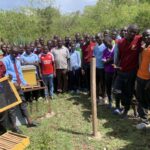
Empowering schools through Trainings, distributions and monitoring of beehives.
February 15, 2026Meliponiculture: Beyond Honey Production
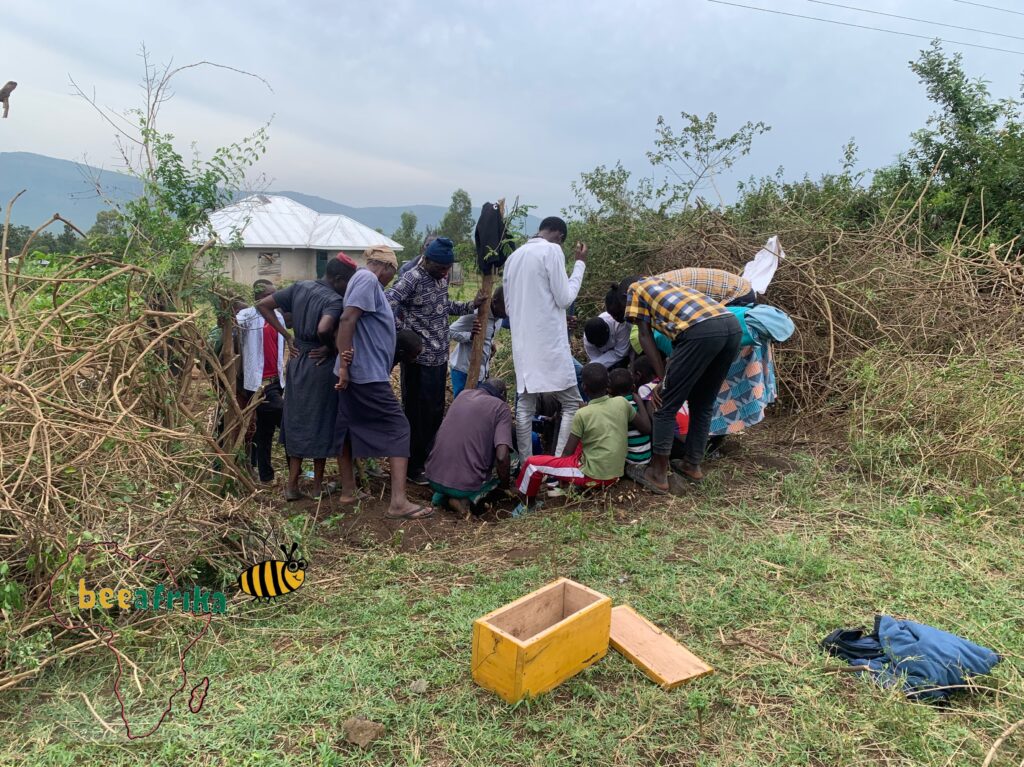
Meliponiculture, the sustainable practice of rearing stingless bees for purposes of harvesting honey and other products like propolis, beebread, remains an alternative livelihoods source for local communities around lake victoria.
The stingless bees remains endangered insects since they are majorly found in forest on trees and on the ground between the rocks. This however poses threats to these insects since people clear down forest for charcoal burning and to open up new lands for cultivation as an alternative way of earning income. habitat destruction and climate change threatens stingless bees hence calling for community led conservation.
Honey from stingless bees are not only valuable for food security but also remains an important traditional medicine that has been exploited for several years. the honey of stingless bees is used to treat infections, respiratory ailments and digestive complications due to its antibacterial and antioxidant properties.
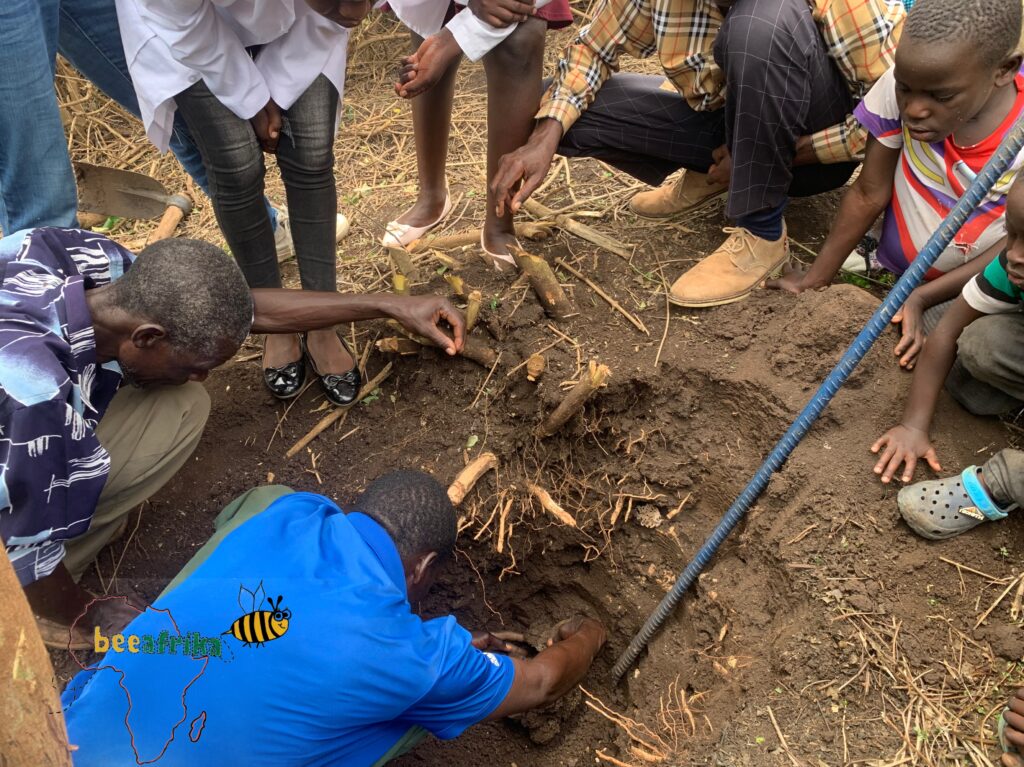
digging out wild stingless colony
By fostering sustainable stingless beekeeping, the local communities who rely on fishing around Lake Victoria will achieve a stable income in their families,food security, biodiversity protection since stingless bees are key pollinators that contribute to the growth of our forest, enhanced community resilience and a revitalized traditional knowledge.
With stingless bees’ honey considered more sweeter and a high quality than other kinds, it remains more valuable with prices fetching higher than the stinging honey.
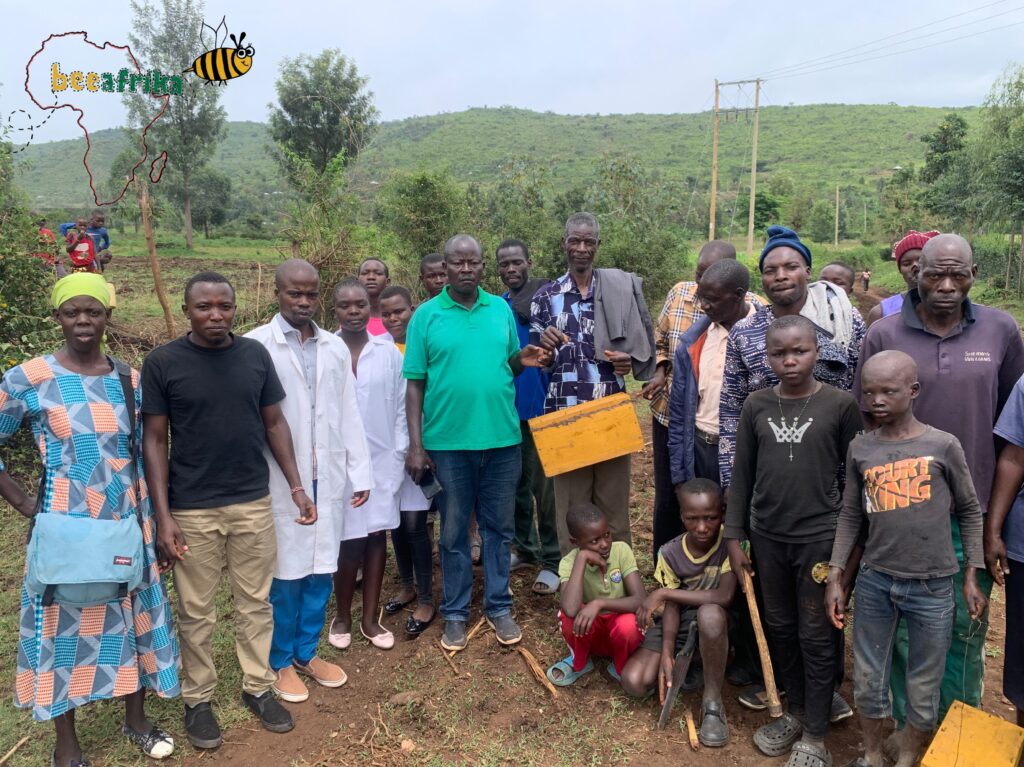
As Beeafrika we remain committed to offering opportunities for the locals to venture into meliponiculture through enhanced capacity building and provision of alternative modern hive to keep the stingless bees. this is an alternative avenues for women who fear and have since withdrawn from keeping the stinging bees due to the highly defensive behaviour of the honey bees. by venturing into stingless, the household can collectively participate leading to an improve living standards of these households.